February 18, 2026
Tenant Improvements in the Lower Mainland: Costs, Permits & What to Expect

Tenant improvements are one of the biggest hidden risks in a commercial lease. Not because the work is complicated, but because the details are usually unclear until it is too late.
This guide gives you a practical roadmap for tenant improvements in the Lower Mainland. As the leading tenant improvement contractors, we have put this guide together to help you understand renovation vs TI differences, permits, timelines, and realistic cost ranges, so you can move forward with confidence.
First, What Exactly Is a Tenant Improvement?
A tenant improvement is a custom build-out or renovation inside a leased commercial space that modifies it specifically for the tenant’s business operations.
When a business leases a commercial property, the space is rarely move-in ready.
Examples include:
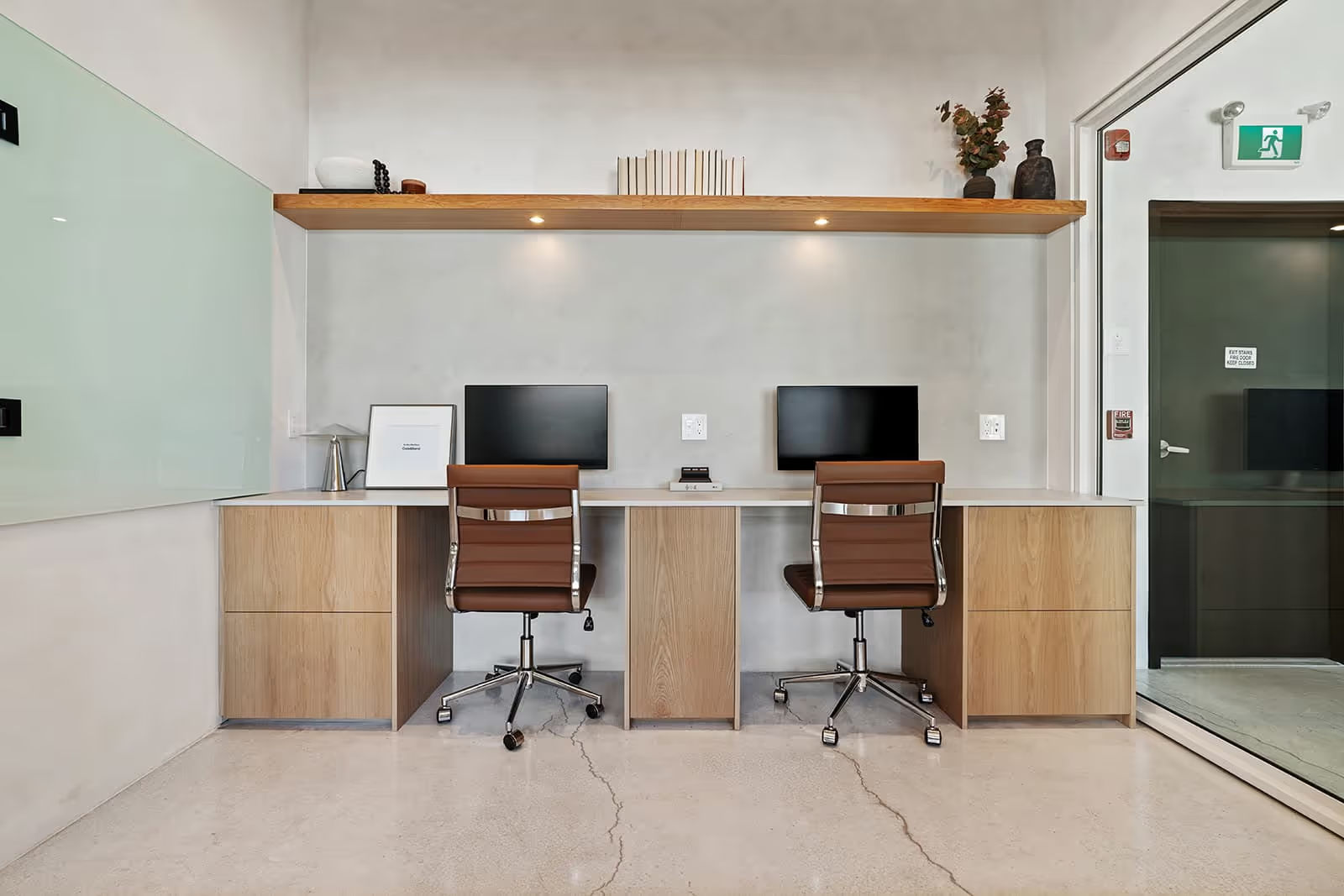
- Office layouts with meeting rooms and private offices
- Retail storefront build-outs
- Restaurant renovations
- Medical and professional clinic upgrades
- Industrial workspace modifications
Tenant improvements are tied to a lease. They are governed by municipal commercial codes. And they must meet building, fire, and occupancy regulations specific to the type of business operating in the space.
Tenant Improvements vs Renovations: What is the Difference?
Let’s understand through this comparison table:
Why does this matter?
Because tenant improvements involve three decision makers:
- The tenant
- The landlord
- The municipality
That means more approvals, more coordination, and more documentation.
This is why working with experienced tenant improvement contractors is critical. Commercial build-outs are not the same as upgrading your house.
Who Actually Pays for Tenant Improvements?
This is where many business owners get surprised.
There are three common financial structures in the Lower Mainland commercial market:
1. Tenant Improvement Allowance
The landlord contributes a fixed amount per square foot toward the build-out.
2. Turnkey Build
The landlord manages and pays for construction, often using their preferred contractor.
3. Tenant Managed Build
The tenant hires their own tenant improvement contractor and may receive partial reimbursement.
Here is what you need to understand:
If the landlord offers a tenant improvement allowance of 40 dollars per square foot, but your build costs 75 dollars per square foot, you pay the difference.
And if you upgrade beyond base building standards, you almost always pay for that.
Before signing your lease, it is smart to:
- Get preliminary pricing from a contractor
- Understand building mechanical limitations
- Clarify restoration clauses
- Confirm what happens if you leave early
This is where Markley Construction often steps in before contracts are finalized. Early consultation prevents costly mistakes later.
Do You Need Permits for Tenant Improvements in BC?

In most cases, yes.
Tenant improvements often require building permits, especially if you are:
- Reconfiguring walls
- Modifying plumbing or electrical systems
- Installing commercial HVAC systems
- Changing occupancy use
Each municipality in the Lower Mainland has its own review timelines and documentation requirements. Permit delays are one of the most common causes of project setbacks.
Working with an experienced tenant improvement contractor who understands local municipal processes significantly reduces the risk of unexpected delays.
How Much Do Tenant Improvements Cost in the Lower Mainland?
The cost of tenant improvements vary depending on complexity, building condition, and finish level.
Below are general 2026 market estimates for the Lower Mainland:
Please note that these are not fixed numbers. They are directional estimates based on current commercial construction conditions in the Lower Mainland.
Factors that influence tenant improvements cost:
- Mechanical upgrades
- Electrical capacity
- Structural modifications
- Custom millwork
- Permit timelines
- Material selections
Note: Going for the cheapest quote is not always the best decision. Commercial spaces must operate safely and efficiently long-term.
The Hidden Costs Most Business Owners Miss
Tenant improvements are not just about construction.
They also involve:
- Design and drafting fees
- Engineering reviews
- Municipal fees
- Development cost charges in some cases
- Temporary occupancy permits
- Inspection scheduling
Delays cost money too. If your opening is postponed by four weeks, that is lost revenue. Planning properly at the start protects your launch timeline.
Timeline Expectations for Tenant Improvements
Here is a realistic overview:
The biggest variable is municipal review.
Cities such as Vancouver often require detailed code compliance documentation. Smaller municipalities may process faster but still require complete submissions.
How to Choose the Right Tenant Improvement Contractor
Not all construction contractors are equipped for commercial tenant improvement projects. Choosing the right team determines whether your project runs smoothly or becomes a financial headache.
When selecting a tenant improvement contractor in the Lower Mainland, consider:
- Proven experience in commercial construction
- Strong project management systems
- Transparent budgeting and scope clarity
- Established relationships with trusted sub-trades
- Clear communication throughout the build
Commercial construction requires coordination between multiple trades, adherence to strict building codes, and careful timeline management.
Common Mistakes to Avoid During Tenant Improvements
Many business owners run into issues because they underestimate the complexity of commercial build-outs.
Some of the most common mistakes include:
- Signing a lease without fully understanding TI responsibilities
- Underestimating permit timelines
- Choosing contractors based solely on the lowest bid
- Ignoring long-term maintenance and durability
- Over-customizing without considering resale or sublease value
Tenant improvements should support both your immediate operational needs and your long-term business goals.
Why Businesses in the Lower Mainland Trust Markley Construction?
Tenant improvements are complex. They involve landlords, municipalities, engineers, inspectors, and strict deadlines.
Markley Construction is not just another general contractor. We specialize in commercial projects and understand the full tenant improvement lifecycle.
Our team works closely with:
- Commercial property owners
- Retail operators
- Office tenants
- Professional service businesses
What sets Markley apart is not just craftsmanship. It is the clarity.
- Clear budgeting
- Clear communication
- Clear timelines
- Clear permit coordination
If you are planning tenant improvements in the Lower Mainland and want to avoid delays, cost overruns, and compliance headaches, book a consultation and work with experienced tenant improvement contractors in the Lower Mainland.
Frequently Asked Questions Business Owners Ask
What is a tenant improvement allowance?
A tenant improvement allowance is a negotiated contribution from the landlord toward construction costs, typically calculated per square foot.
How long do tenant improvements take?
Depending on size and complexity, projects may range from several weeks to several months. Permit timelines often impact overall schedules.
Are tenant improvements tax-deductible?
In many cases, tenant improvements can be depreciated as capital improvements. A tax professional should review your specific situation.
Do I need architectural drawings?
Most commercial tenant improvement projects require drawings for permit approval and construction accuracy.
Can tenant improvements increase property value?
Yes. High-quality tenant improvements often enhance long-term asset value and leasing potential.
Need Your Project Constructed Efficiently, Quickly & Up To Code?
With a proven track record of transforming spaces for over two decades, we take pride in our commitment, quality workmanship and excellent service as the home renovation contractor.