December 16, 2025
Common Questions About Deck Building in the Lower Mainland
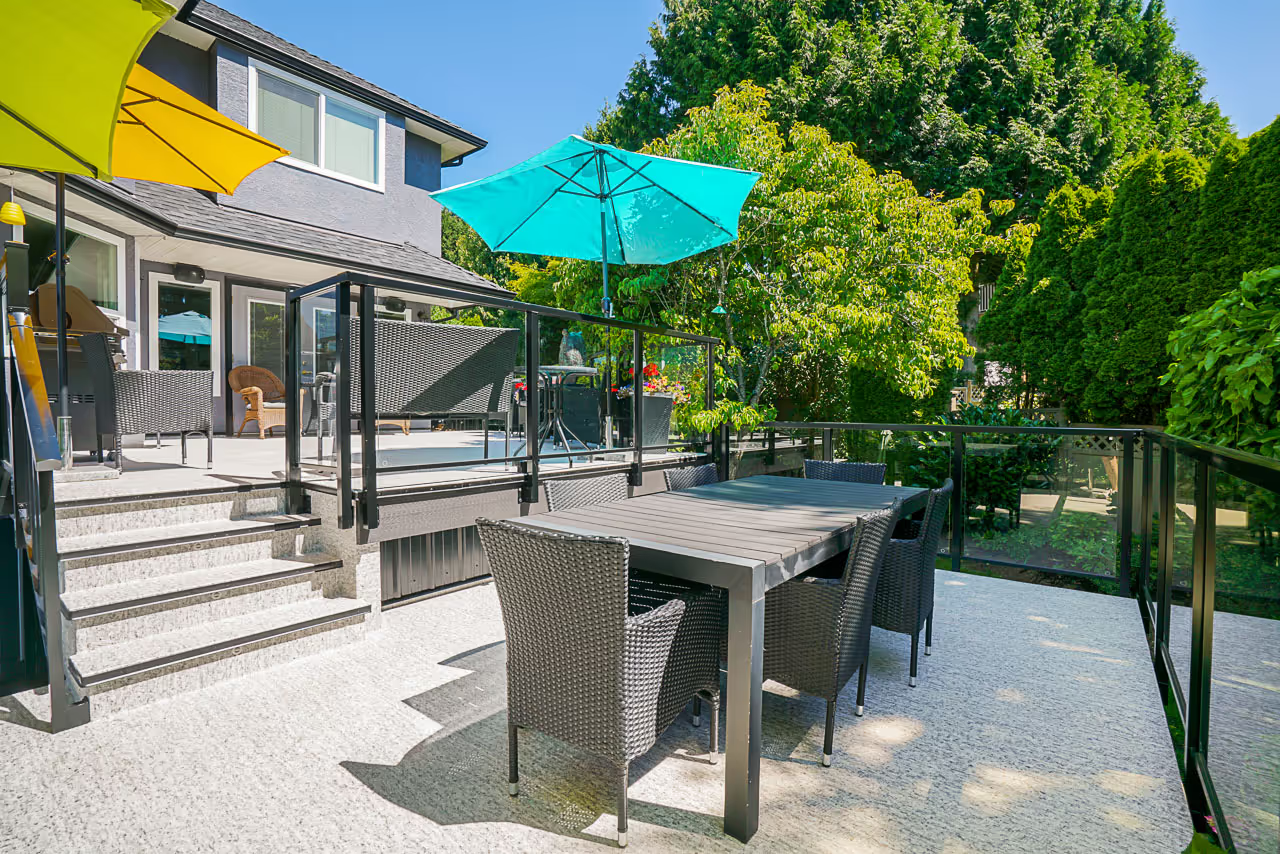
A new deck should feel like an upgrade, not a second job.
But once you start researching, the questions pile up fast. Permits. Price. Materials. Ground level vs raised. Pool decks. Building over concrete. And in the Lower Mainland, you also have to think about moisture, drainage, and slippery surfaces because rain is not a “sometimes” thing here.
This blog is a straight to the point guide to the most common questions people ask about deck building in Langley, Coquitlam, Vancouver, and nearby areas.
Do you need a permit to build a deck?
In many cases, yes. Whether you need a permit depends on your municipality and the details of the deck, especially the height, total size, location on the lot, and whether the deck is attached to the house. You are more likely to need a permit if the deck is raised off the ground, includes stairs and railings, connects to the home, or is part of a larger renovation.
Even when a permit is not required, the deck still needs to be built safely and properly, including stable footings, strong framing, and railings when there is a fall risk.
Can I build a deck without a permit?
Sometimes. Some low decks may be exempt in certain municipalities, but the rules vary. The safest approach is to confirm with your local building department before starting. Skipping a required permit can create problems later, such as delays during construction, issues with inspections, and headaches if you sell the home and buyers request permit history.
How much is it to build a deck in Langley?
Deck pricing in Langley ranges a lot because “deck” can mean anything from a small ground level platform to a large composite deck with multiple stairs, upgraded railings, and built in features.
Your final deck cost usually depends on:
1. Size and layout
Bigger decks cost more, and complex shapes cost more than a simple rectangle.
2. Height and structural requirements
Raised decks typically need more framing, stairs, and railings.
3. Materials
Pressure treated wood, cedar, composite, and PVC all land at different price points.
4. Railings and stairs
Railings can be a major cost factor, especially glass and premium systems.
5. Site access and demolition
Tight access, old deck removal, and disposal can add labor and cost.
If you want accurate pricing, the quickest path is to decide your approximate size, choose the decking material, and choose a railing style. Those three decisions make quotes far more consistent.
Can I build a deck directly on the ground?
Yes, and ground level decks are popular in the Lower Mainland.
The big warning is this: a ground level deck still needs a proper base and drainage. You should not place framing directly on soil or grass. That leads to sinking, shifting, and rot.
A proper ground level deck usually includes:
- A base that drains well
- Support points like footings, deck blocks, or another approved method
- Airflow under the deck when possible
- Materials and fasteners designed for outdoor moisture
If your yard holds water after rain, this matters even more. A deck built without drainage planning can stay damp for long periods, which shortens its life.
What materials do I need to build a deck?
Most decks are a full system, not just boards. A typical deck build includes:
- Footings or deck blocks and post bases
- Posts, beams, and joists for the structure
- Decking boards (pressure treated, cedar, composite, or PVC)
- Exterior rated screws, connectors, and hangers
- Railings and guard components if needed
- Stairs, stringers, treads, and handrails when required
- Flashing and ledger hardware if the deck is attached to the house
If someone quotes you based only on deck board price, you are not seeing the full picture. Structure and hardware matter just as much, especially in a wet climate.
Read also: Composite vs Wood Deck- Which is the best?
What is the best decking material for Lower Mainland weather?
It depends on your budget and how much maintenance you are willing to do.
1. Pressure treated wood
Usually the most budget friendly option. It can last a long time, but it typically needs regular cleaning and sealing or staining to look good and reduce weather wear.
2. Cedar
Looks great and has natural resistance compared to basic lumber, but it still needs maintenance. Many homeowners choose cedar for appearance and feel underfoot.
3. Composite
Costs more up front, but many people like it because it reduces the need for frequent staining and sealing. It is also popular for its consistent look.
4. PVC
Another low maintenance option. It can perform very well in wet conditions when installed correctly and with proper ventilation.
The best choice is the one that matches your lifestyle. If you know you will not keep up with staining every couple of years, choosing a lower maintenance surface can save you money and stress long term.
Can you build a deck around an above ground pool?
Yes. Pool decks are common, and they can make your pool safer and easier to use.
A deck around an above ground pool should plan for:
- Safe entry and exit points
- Slip resistant surfaces
- Railings and gates when needed
- Enough space for pool maintenance and winterizing
- Drainage so water does not sit against the structure
Many homeowners choose either a small platform and stairs or a partial wrap that creates a seating zone and a dry area for towels and shoes.
How much does it cost to build a pool deck?
Pool deck pricing varies based on how much of the pool you wrap and how detailed the build is. A small access platform with stairs costs much less than a full surround deck. Costs increase when you add railings, gates, multi level sections, and built ins like benches or privacy screens.
The most budget friendly approach is usually a partial wrap that covers the high use areas.
Can you build a wood deck over concrete?
Yes, in many cases. This is a common solution when you have an older concrete patio that you want to upgrade visually without removing it.
A deck over concrete works best when:
- The concrete is in good shape
- Water drains properly and does not pool
- You have enough clearance at doors
- You can maintain airflow so moisture does not get trapped under the framing
If water pools on the concrete, moisture can become a long term issue. In those cases, drainage planning becomes the deciding factor.
How long does it take to build a deck?
Once construction starts, many standard decks take about one to two weeks. Bigger decks, multi level designs, and complex railings can take longer. The longer timeline is often before the first board gets installed. Design decisions, material lead times, and permit timelines can add days or weeks depending on the project.
If you want to avoid delays, choose materials early and confirm permit requirements upfront.
What should be included in a deck quote?
A solid deck quote should be specific. It should clearly list what you are getting so you can compare quotes properly.
Look for these items:
- Deck size and layout
- Deck height and number of stairs
- Material type for decking and framing
- Railing type and linear footage
- Footing and support method
- Demolition and disposal if replacing an old deck
- Permit handling and inspection steps if required
- Timeline and payment schedule
- Warranty details for workmanship and materials where applicable
If a quote feels vague, ask for detail before you approve it. Clear scope prevents surprise costs.
Read also: Understanding the differences between Deck vs Patio
Can you build a deck in winter in the Lower Mainland?
Sometimes, yes, but it depends on weather and site conditions. Winter rain can create muddy access, wet framing conditions, and delays during finishing. Some homeowners prefer spring and summer for scheduling and comfort, but if your project is simple and your site stays workable, it can still be done.
A realistic plan considers weather days and protects materials properly during the build.
What are the most common mistakes people make with deck building?
The biggest issues we see are:
- Building without confirming permit requirements
- Underestimating total cost by focusing only on deck boards
- Skipping proper base prep and drainage
- Choosing materials that do not match the homeowner’s maintenance tolerance
- Not planning stairs and railings early, then getting surprised by cost and layout changes
- Not thinking about how the deck connects to the home and sheds water
If you avoid those mistakes, your deck is far more likely to feel solid and look great for years.
Ready to Build a Deck That Actually Fits Your Home and BC Weather?
If you want deck building contractors in Langley or other areas of Lower Mainland who keep the process simple, the plan clear, and the workmanship strong, Markley Construction is a top choice in the Lower Mainland.
We build decks that hold up to real life in Burnaby, Langley, Vancouver, Coquitlam, and nearby areas. From material selection and layout to permits and clean finishing details, we focus on decks that look great, feel stable, and stay low stress for homeowners.
If you are ready for pricing and a clear next step, contact Markley Construction to book a call and we will take of everything else.
Need Your Project Constructed Efficiently, Quickly & Up To Code?
With a proven track record of transforming spaces for over two decades, we take pride in our commitment, quality workmanship and excellent service as the home renovation contractor.